
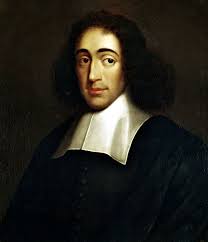
Baruch Spinoza’s Ethics is, in part, a response to the mind-body problem that arose from Cartesian metaphysics. While Descartes argued for two fundamentally different substances, material bodies and immaterial minds, he could not explain their interaction. Spinoza’s monist metaphysic attempts to solve this by arguing that there is only One Substance – God, or Nature – attributed with extension and thought. While a challenging claim to accept for most because of subject-object duality, I, nevertheless, argue assent to Spinoza’s monism follows by grasping the key distinction between natura naturata and natura naturans because in revealing process as most basic through the cultivation of intuitive knowledge the dualist objections that derive from substance metaphysics are overcome. This paper will unfold in the following way: first, I will clarify necessary terms to show the thrust of this thesis, then move into explicating monism and providing the reasons that overcome the dualist objections.
Now the crucial distinction between natura naturans and natura naturata. These two qualities are attributed to the One Substance of Spinoza’s system. The naturans qualifier is the energy that permeates Nature, the productive force inhering within.[1] In other words, natura naturans is the elusive-energizing element of Nature that manifests everything material and immaterial. On the other hand, the naturata qualifier is what has been produced, the various products of Nature.[2] Importantly, natura naturata is what humans perceive prima facie. For instance, some subject perceives the distinct objects of the chair in which they sit, and the corresponding sensations in their body, the words on this page, and the corresponding thoughts in their mind.
Another important distinction for the following discussion is Spinoza’s theory of knowledge. His taxonomy consists of three categories. The first kind is “knowledge from casual experience,” which encompasses opinion or imagination and constitute confused ideas.[3] The second type of knowledge of inferential reasoning promotes adequate ideas – understanding the why and the how of a thing. For example, I have an adequate idea of some immaterial claim, perhaps a philosophical or scientific thesis, when I can explain the reasons – the why – that support the claim, and furthermore, the arguments – the how – that defend the reasons given. The third type – intuitive knowledge – follows sequentially from the first two. In his own words, intuitive knowledge “proceeds from an adequate idea of the formal or real essence of certain attributes of God to an adequate knowledge of the essence of things.”[4] Namely, moving from various thought or extension forms – natura naturata – towards natura naturans, which, as I argue, is the essence – the what – of things in toto. Thus, through cultivating the second type of knowledge, which explains why and how things are, one reveals the third type of knowledge, what is, thus moving from a substance to process metaphysic. In other words, via understanding the Nature of substances – natura naturata – one comes to see their essence, natura naturans, or the most basic process that produces all beings in their infinite ways, and therefore that everything is Nature.
With a general thrust of the thesis, let us backtrack to book one to reveal how Spinoza unfolds this claim that everything is “God, or Nature.” This single Substance is what exists independently; it “is in itself and is conceived through itself.”[5] It is basic to the explanation of events, that is, the first cause of all phenomena. God or Nature is infinite and all-inclusive.[6] Importantly, God is also non-anthropomorphic. He reminds us to take “great care not to confuse God’s power with a king’s power.”[7] While he offers an ontological argument that argues for the existence of this ultimate Being a priori, assent to monism for moderns is more likely to follow by understanding the key distinction between naturans and naturata a posteriori. But to continue with his train of reasoning, supposing “the necessity, [proved by the ontological argument] of the divine nature, there must follow infinite things in infinite ways.”[8]
Spinoza then mediates this single Substance and its infinite manifestations with attributes. Attributes are “that which the intellect perceives of substance as constituting its essence.”[9] The human intellect perceives only two – extension and thought. He writes, “the thing extended and the thing thinking are either attributes of God.”[10] Or, more explicitly, “God is an extended thing”[11]; “God is a thinking thing.”[12] For example, extension manifests in an infinite number of ways that sensations make apparent – clouds, trees, dogs, houses, etc. On the other hand, thought also manifests in an infinite number of ways – books, music, conversations, etc. To further categorize Being, Spinoza employs modes, and by that, he means “the affections of substance,” the infinite manifestations of these two attributes.[13] Modes are that which have existence and are perceived. They promote images or “knowledge from casual experience.” We can think of modes as the forms that beings take on. For instance, a can of coke can be cylindrical or crushed. Likewise, the human body can take on various modes or postures – standing, sitting, and supine. Similarly, with the mind, for example, the thought of x or y, or the mode of being energized as compared to tired. Whatever the mode, they are manifestations of Nature as Nature is the first cause of all phenomena. Accordingly, God, or Nature, is the immanent essence that manifests particular things while simultaneously the existence of all.[14] In Spinoza’s language, essence involves existence.[15]
It also follows that modes are the most particular, whereas Substance is the most universal, while attributes, the essence of various particular affections, are between Substance and mode. Thus, we move from the ultimate Substance to the attribute essence to modal existence, but because Nature is immanent, it has the special status of both essence and existence.[16] Furthermore, all products are related to the producer, which is why God, or Nature, is the correlative for all manifest beings. Hence, Nature preserves and permeates the entire taxonomy of Being as natura naturans, yet perceived by humans as natura naturata.[17] I argue that assenting to monism follows by reversing this instantiation, thus the a posteriori emphasis for moderns, namely making inductive leaps back up, so to speak, the chain of being by cultivating adequate ideas, which in turn facilitates intuitive knowledge of Nature – that is, moving beyond the perceptions of naturata to a knowledge of naturans.
The cultivation of adequate ideas through inferential reasoning is what categorizes Being. With more categories, one comes to understand Nature, namely the laws that govern the realm of extension and the realm of thought, and if one understands the why and how of these various things, insight into what it is – energy – follows. It is from natura naturata that I can eventually generalize to that which is common throughout all beings, namely natura naturans, which suggests that the most basic element of Reality is process amidst the diverse set of substances that exist. Paradoxically, via substance metaphysics, one gains insight into process metaphysics, thereby demonstrating the unity of all or that everything is Nature.
The largest obstacle to assent is that everything cannot be of one Substance because it is possible to divide extended objects. The objection starts from the supposition that matter is divisible and thus made up of parts.[18] However, as Spinoza tells us when we consider matter with our imaginations, we are led astray from the truth – images only produce confused ideas. Recalling Spinoza’s theory of knowledge makes the resolution of this objection easier. “If we consider [perceivable Nature] in the imagination, and this is what we more frequently and readily do – we find it to be finite, divisible, and made up of parts. But if we consider it intellectually and conceive it in so far as it is Substance – and this is very difficult – then it will be found to be infinite, one and indivisible.”[19] For instance, take a dish of spaghetti with meatballs. I can see the noodles and meatballs distinctly. I can cut them up physically with my fork and knife and separate the meatballs from the spaghetti. Thus, by what strikes the sensory faculties, I conclude there is no infinite unification because my imagination proves otherwise. However, when I cut them up mentally, when I intellectualize, a deeper truth is realized. If one calculates their resting potential energy and then changes their displacement on the plate, the energy, upon recalculation, is the same. It is conserved. The potential energy the food has in space and time holds anywhere and anytime by the law of the conservation of energy, which states that energy does not change in the manifold changes that Nature undergoes. Or upon digestion, the energy in the food is transmuted into heat energy and is conserved in my being. While food qua food comes into existence and goes out of existence – it can be altered; food qua Nature does not come into existence nor go out of existence because, by the law of the conservation of energy, energy is not created nor destroyed, which shows the indivisibility of the substratum, of Nature. Hence, the imagination makes one think everything is divisible, but the intellect, through reasoning discursively, reveals otherwise. When I regard elements of natura naturata with my intellect, I develop adequate ideas that, upon synthesis, promote intuitive knowledge of the ways things are. In other words, by using reason, I come to know why it is and how it is, namely its causes, but more importantly, what it is – energy – which not only establishes the causal interdependency of all phenomena but also that everything is, at bottom, natura naturans.[20] However, while objects can conserve energy, there is still a persistent obstacle to assent, namely the view that I, this subjective experience, is unified with everything else, that I am Nature.
To move beyond this subject-object objection, let us now discuss parallelism – Spinoza’s conception of human nature. As mentioned above, there are two attributes: the attribute of thought, which manifests ideas, and the attribute of extension, or the body, which produces images. These two spheres run in parallel for Spinoza, which means a certain mind state correlates to a certain body state. They do not causally interact with one another because they are radically distinct.[21] Nevertheless, “thinking substance and extended substance are one and the same substance, comprehended now under this attribute, now under that.”[22] The body, in his view, is simply an idea in the mind – they are integrated in that each moment in space and time, a mind state corresponds to a body state.[23] To visualize, imagine a trolley car rolling down a set of railway tracks. Each moment the wheels contact a particular segment of the tracks a new state is experienced in mind and body. Mind is one track, body the other, whereas the trolley is naturans that enlivens these two simultaneously. Humans can cycle between these – one moment thought, the other moment body, but they can never be held simultaneously and are rather attended to momentarily.[24] And note, “the intellect … must be related to natura naturata, not to natura naturans”[25] because the intellect is a product, not what produces. While the upshot of this proposition is that there is no contingency, no free will, but for this paper, the reason I note this is that the force of naturans also permeates my being – I am Nature, not distinct from Nature.
Unfortunately, immediate, casual experience convinces me that I am distinct from objects, thus inhibiting assent. It seems that consciousness is located behind the eyes. However, if the body is an idea of the mind, consciousness is embodied, meaning that whatever is sensed through the body conditions the mind to have a corresponding idea, and there is no division between mind and body. It is a flow of images and ideas that compose consciousness. There is an ability to direct awareness towards the various appearances within phenomenal consciousness. That is, towards the thoughts that flow through consciousness, or towards the images in consciousness from sounds in the other room, or the itch forming on my rear shoulder, etc. Everything is an appearance in consciousness that one can observe. That I can cycle between extension and thought and comprehend them “under this attribute, now under that” indicates that what is most basic to human psychology is awareness. Whether external or internal, these perceptions are the correlatives of I, of consciousness. These various thoughts and extensions create conscious experience, showing that this experience is fundamentally interconnected, that objects create the subject, dispelling subject-object duality. Thus, consciousness is not solely mental but fundamentally embodied and interconnected with the environment. Also, internal and external perceptions, ideas and images, flow impermanently showing that naturans permeates my being too.
Some will object here, saying that there is permanence as they have knowledge of the self and other things. But the elusive-energizing force of Nature governs human psychology too. Reflect on your knowledge – all that is ever immediately present is some idea or image one moment and some idea or image another moment. Even though knowledge appears static, say the capturing of thought in writing, if one observes their immediate experience of knowing closely, it is inference after inference, and thus at the deepest level dynamic. Thought and extension change incessantly because the energy that permeates all Beings is dynamic. It is the insight into this fundamental impermanence of natura naturans that I can cultivate the intuitive knowledge to assent to monism, that everything is Nature, that not just natural objects but artificial too, as well as myself because we are all products of this force that flows through matter and consciousness.
As I hope to have argued, assent to Spinozism follows from an understanding of the crucial distinction between natura naturans and natura naturata because it overcomes the dualist objections by moving from understanding the essence of attributes – substance metaphysics – to the essence of things – process metaphysics.
[1] Seymour Feldman, “Introduction,” in Ethics, (Indianapolis, IN: Hackett Publishing Company, 1992), 11.
[2] Ibid.
[3] Baruch Spinoza, The Ethics, (Indianapolis, IN: Hackett Publishing Company, 1992), IIp40s2.
[4] Ibid., emphasis mine.
[5] Ibid., Id3.
[6] Ibid., Id6, Ip13-14.
[7] Ibid., IIp3s.
[8] Ibid., Ip16.
[9] Ibid., Id4.
[10] Ibid., Ip14c2.
[11] Ibid., IIp2.
[12] Ibid., IIp1.
[13] Ibid., Id5.
[14] Ibid., Ip18.
[15] Ibid., Id1, Ip20, Ip25.
[16] Ibid.
[17] Feldman.
[18] Spinoza, Ip15s.
[19] Ibid.
[20] Steven Nadler, “Knowledge,” in Baruch Spinoza, The Stanford Encyclopedia of Philosophy (Summer 2020 Edition), Edward N. Zalta (ed.), https://plato.stanford.edu/archives/sum2020/entries/spinoza/.
[21] Ibid., Ia5.
[22] Ibid., IIp7s.
[23] Ibid., IIp12-13.
[24] Ibid., IIp7s.
[25] Ibid., Ip31.