
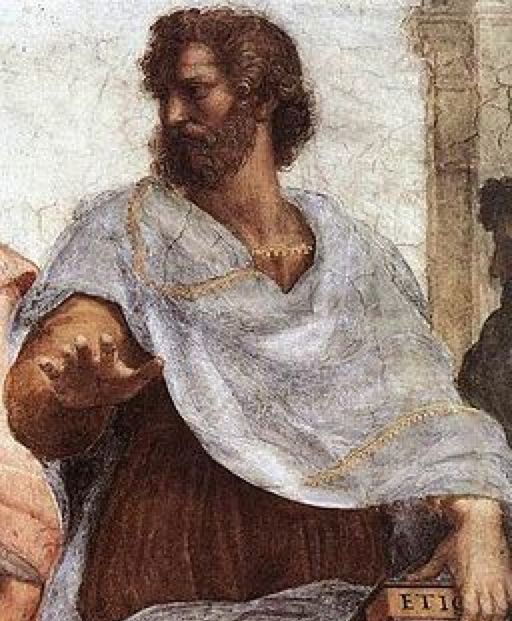
While the intellect is obscure, there are thinkers from past generations, such as Aristotle in De Anima III 4-5, who have attempted to illuminate our understanding, which has significantly aided posterity. Aristotle’s claims on such topics have given rise to numerous interpretations, some of which are more plausible than others, such as, for instance, that the human intellect just is the divine intellect, or that the human intellect is distinct from the divine, but somehow participates in it, or that human intellects are numerically distinct according to each human while distinct from the divine intellect yet caused by it.[1] Hence, as Christopher Shields writes, the first important decision “concerns whether De Anima III 5 should be taken as characterizing the human intellect or the divine intellect.”[2] In this paper, I will defend the view that there are numerically distinct productive intellects that are distinct from, yet all share in, the divine intellect. Upon explaining the meaning of Aristotle’s key terms, I will argue for this by (1) examining Aristotle’s ‘order of learning’ vs. ‘order of nature’ distinction to not only situate his approach to understanding but also show that in Aristotle’s universe, humans come into the world ignorant – without innate ideas – and are informed about the order of nature through their unique sensory experience; (2) by stressing the distinction between thinking and understanding to show when humans understand the order in nature, they are understanding and partaking in the divine intellect; and (3) by considering the function argument and climax of Aristotle’s Nicomachean Ethics to show how such essential claims would be less intelligible if not for the view I defend about his psychology.
To get into Aristotle’s universe, one must assume, as Aristotle does, that things are composites of form and matter with an end or purpose.[3] Furthermore, that a thing achieves its purpose when it exercises its latent potentials. Aristotle technically refers to this in terms of potentiality and actuality. Actuality is further divided into first and second actuality.[4] To illustrate, something must have a specific material body capable of receiving a specific form – this is potentiality.[5] When the specific matter has been informed, first actuality occurs.[6] First actuality provides some matter with latent capacities, which make the thing what it is, and it is for this reason, that some later commentators hold that first actuality is similar to “second potentiality” because the latent capacities that follow first actuality can be actualized when a thing achieves second actuality.[7] Second actuality occurs when the latent capacities are exercised and come to fruition.[8] For example, the eye has the capacity to see even when the eye is closed because the form, first actuality, shapes the material such that sight can manifest.[9] When the eye is open, second actuality occurs because the eye is exercising its potential to see. In the case of the human, there are many parts with correlative capacities all being exercised simultaneously for the human to function; however, in our accounts, we can separate them.[10] Upon separation within our account, we find that humans possess rational souls, which are informed with the capacity to understand the order in nature.[11] When humans understand nature, second actuality occurs because the human intellect is exercising its potential to understand.
Now, in De Anima III, we get Aristotle’s account of the rational soul. Aristotle’s account of the rational soul holds that understanding is dependent on sensation because perception is the reception of sensory forms, and this reception informs how things appear.[12] He writes, “appearance cannot occur without perception” [13] and “the soul never thinks without an appearance.”[14] Thus, appearances of particulars play a key role in thinking. In De Anima III, 4, we get Aristotle’s starting account of the human intellect as “that part of the soul with which the soul knows and thinks.”[15] In general, the human intellect is distinguished from other faculties, such as the nutritive and the perceptive faculties, by its actualizing counterparts[16] – appearances or phantasms[17], which correspond to thinking, and universals or noēta[18], which correspond to knowing. Noēta are different from phantasms in that noēta are universal forms separate from matter, whereas phantasms are particular sensible forms inseparable from matter.[19] For instance, Pythagoras’ theorem is a universal noēta that holds for all particular right-angle triangles that appear to the intellect by seeing such figures.[20] Humans understand noēta, and if the universal noēta is absent, they are said to be thinking about particular phantasms. Therefore, thinking and understanding are different, which I will return to below.[21]
To be more specific, for the composite of matter and form to hold at the level of the rational soul, Aristotle divides the intellect into its passive and productive parts. As he writes at the start of De Anima III, 5 “in the whole of nature each kind of thing has something as its matter, which is potentially all the things in the kind, and something else as the cause and producer, which produces them all … these differences then must also be found in the soul. One sort of intellect corresponds to matter, by becoming all things. Another sort corresponds to the producer by producing all things.”[22] On the one hand, is the passive intellect, which, as the “place of forms,” receives all forms, particularly sensible forms, because this part of the intellect is matter-like.[23] He holds that it has “no nature of its own, other than that of having acertaincapacity,” namely the capacity to receive forms.[24] The passive intellect is illustrated as something like a writing tablet.[25] And given its passiveness, the appearances arise on their own. These appearances have the potential to actualize understanding, which the productive intellect makes possible.
On the other hand, since the intellect not only receives sensible forms but also understands universal forms inhering within such appearances, Aristotle posits, by necessity, a productive intellect. He must posit the productive intellect to explain the phenomenon of abstraction from particular appearances to the real universals that allow us to understand nature.[26] The productive intellect, in Aristotle’s universe, plays a key role in actualizing understanding.[27] Aristotle compares the productive intellect to a light that illuminates whatever it shines on.[28] As light reveals colours that existed in darkness, so the productive intellect is like light in revealing, i.e., actualizing the noēta that existed in potentiality in the appearances.[29] “The second sort of intellect,” specifically the productive intellect, writes Aristotle, “is separable, unaffected, unmixed, since its essence is actuality … this alone is immortal and everlasting,” which resembles the attributes of the divine intellect, to which we now turn.[30]
The divine intellect is the primary mover that causes motion in Aristotle’s universe.[31] The divine intellect is “the sort of [first] principle on which heaven and nature depend.”[32] The divine intellect is Aristotle’s God, which has the following attributes: separated from the sensible,[33] unaffected,[34] without matter,[35] actuality,[36] and eternal,[37] which closely parallels the productive intellect.[38] What’s more, and for our purpose here, appealing to Myles Burnyeat, the divine intellect is the “system of absolutely correct concepts … that allow us objective understanding of reality.” [39] In other words, the divine intellect is the set of all necessary truths found in the things themselves that govern nature, which at any period of time is contained within the current body of scientific knowledge, i.e., epistēmē.[40] If God is “without matter,” and epistēmē seeks the forms in the natural matter,[41] epistēmē constitutes the forms of Aristotle’s God. Furthermore, the eternal quality of epistēmē overlaps with the divine intellect. As Aristotle writes, “the object of scientific knowledge is of necessity. Therefore it is eternal; for things that are of necessity in the unqualified sense are all eternal; and things that are eternal are ungenerated and imperishable.”[42]
Now, Aristotle’s distinction between the ‘order of learning’ vs. ‘the order of nature’ must be kept in mind for my claim. This means that “there is a difference between what is prior and better known in the order of nature and what is prior and better known to man.” [43] What is better known to us – the particular – is “closer to perception,” and what is better known in the order of nature – the universal – is “further from perception.”[44] This distinction must be kept in mind because it grounds his approach to understanding and leads to the view that humans come into the world ignorant, that is, uninformed, without innate ideas, a blank slate.[45] When humans understand or achieve second actuality, they ascend this scala naturae and move from the particular appearances to the universal noēta that undergird what appears. It is the productive intellect that makes this ascent possible and what is enriched through ascending and why there must be numerically distinct productive intellects because every intellect senses different particulars from which they induce to universals. By being shaped and informed through engaging things in the world, possibly with the aid of a textbook that explains physical stuff or an interpreter that explains metaphysical stuff, the blank slate comes out of ignorance, comes on Aristotle’s view, to understand the true nature of reality, which is just the divine intellect. Humans, of course, differ in how much they have overcome their ignorance. Thus, they also differ in how much they understand the order of nature. Thus, the ‘order of learning’ vs. the ‘order of nature’ distinction is a reason for their being numerically distinct productive intellects that are distinct from, yet share in, the divine intellect.
Secondly, the distinction between thinking and understanding is another reason that supports this thesis. Imagine the means to understanding anything. In learning about most things, there is a period of initial confusion where one wonders. By thinking and attending to something sufficiently, in a rather rapid fashion[46] the distinct parts, to a greater or lesser extent, become related together, i.e., a relationship or pattern within the appearances is discerned, thereby making the whole more intelligible such that the thinking learner transitions to some degree to an understanding knower. This transition to understanding is induction in effect, which is an innate power of nous in Aristotle’s view.[47] Understanding is an acquired state, distinct from ordinary thinking that humans find themselves in most of the time.[48] As Burnyeat’s writes, “all we are born with is the capacity to think and reason, which we must train and use it if we are to arrive at a theoretical understanding of the world.”[49] Through training, some will understand thermodynamics, others will understand the DNA of specific animals, and others will understand musical theory.[50] What they all share in common is a productive intellect achieving second actuality of some particular appearances. Furthermore, the productive intellect, by working with the materials of the passive intellect, achieves understanding, which illuminates part of the divine intellect. When the productive intellect understands, it is part of the divine intellect that is being understood, but only that part of nature which was first sensed given his commitment to the order of learning. The consequence is that every human being must have a distinct productive intellect because humans are limited in what they can sense, so they can only come to understand some of all potential understanding, namely the divine intellect, but all will share in the divine intellect because experience inevitably leads to understanding some universal forms. Thus, the productive intellect is distinct for each human because humans are limited to understanding some of the necessary truths of nature given the transition from thinking to understanding and the obvious constraints associated with learning, yet regardless of what is understood, since all understanding originates from the divine intellect, the productive intellect will share in the divine intellect.
Now, other views will contend that the productive intellect does not share in but rather is the divine intellect because Aristotle states that they are both full actuality.[51]As Caston writes, “unless we suppose that the productive intellect has a different essence we must identify it with the divine intellect as it [the productive intellect] too is full actuality.”[52] Appealing to full actuality to ground such an opposing interpretation is intelligible because the universals one has come to understand can be actualized at will as is said with “someone who is said to have actual knowledge.”[53] Further, the productive intellect is actual when either understanding is occurring, say during a moment of insight when an immaterial noēta is understood for the first time or whenever the productive intellect is actualized by a counterpart form inhering within some appearance it already understands, i.e., whenever someone relies on a universal they already understand and is then “able to actualize his knowledge through himself” to make sense of what currently appears.[54] It is the latter part of this disjunct especially that leads one to conclude that the productive intellect is continuously active because past forms are continuously and perhaps naturally used to make particular appearances meaningful to some degree by subsuming under universals. However, in either case, there will be moments when understanding is not predominant, such as coming into contact with something completely foreign for the first time and thinking about what you do not understand. In such cases, the universal is actual, but to a partial, not full, degree with those appearances within one’s environment they already understand, but it is not with the foreign appearance that may capture one’s attention more, thereby causing us to think, which is not full actuality, but an innate capacity all human souls have by first actuality. Furthermore, while we can get a momentary glimpse of full actuality by ‘getting underneath the appearance’ to grasp the form when we have an insight, most of the time, we are affected by matter, receiving sensible forms and engaged in ordinary thinking. Aristotle even writes the divine intellect “is always in this state [of full actuality], whereas we cannot always be in it.”[55]
The last reason that productive intellects are numerically distinct from the one divine intellect while sharing in it follows from examining the Nicomachean Ethics, specificallyI 7 and X 7. In chapter 7 of the first and last book, we find Aristotle’s function argument and his urging the reader on to the contemplative life, which gives credence to my view because these ethical claims would be less intelligible on a different reading of De Anima III 5. In Nicomachean Ethics, I 7, Aristotle argues that human flourishing follows by actualizing our distinctive part, namely our understanding, in a virtuous way.[56] Many other living bodies can grow and digest food,[57] others can move and pursue pleasure, and animals such as apes are cognizant of honour, while parrots can even imitate,[58] but only humans have the ability to understand the universals that govern nature because of their form, their soul, their intellect, which shares in the divine intellect that undergirds the appearances. Any of these souls achieve their function or purpose when they exercise their distinct latent potential. Human beings, in particular, achieve their function by actualizing their distinct potential, namely understanding the order in nature, the divine intellect, by pursuing the truth through pure theoretical activity, i.e., study, instead of pleasure, honour or money.[59] It is by engaging in such ‘work’ that the human good life, eudaimonia, follows. Thus, eudaimonia consists in actualizing the latent potentiality of understanding. It is because the productive intellect participates in the divine intellect while remaining distinct from it that makes the function argument more intelligible.
What’s more, at the end of the Nicomachean Ethics, we find Aristotle’s claim that “the activity of study is supreme, since understanding is the supreme element in us”[60] and “as far as we can we ought to be pro-immortal, and go to all lengths to live a life that expresses our supreme element.”[61] Or in Terence Irwin’s words,
“in [NE] X 6-8, Aristotle returns to the discussion of happiness. He argues that the human function is especially realized by the pure intellectual activity of study – the contemplation of scientific and philosophical truths, apart from any attempt to apply them to practice. Since human happiness consists in the fulfillment of the human function, study is a supremely important element in happiness. For it is the highest fulfillment of our nature as rational beings; it is the sort of rational activity that we share with the gods.”[62]
In arguing that humans should pursue the activity of study, Aristotle must have held that the productive intellect is not identical to the perfect divine intellect. However, the productive intellect can become perfected by achieving an understanding of the appearances it naturally wonders about. Thus, some human productive intellect, through the activity of study, not only fulfills its function but also becomes more like the divine intellect by gradually completing itself. It is worthwhile to mention Caston’s remark that “to whatever extent we can become like God, we cannot attain his perfect state.”[63] Nevertheless, we can become closer to God by understanding the order in nature more because the human productive intellect shares in the divine intellect yet forever remains distinct from it. These opening and closing chapters then, when taken together, seem to indicate that the productive intellect at most shares in the divine intellect without ever being identical to it; if not for interpreting his psychology as I have, Aristotle’s function argument and imperative to lead the contemplative life in the Ethics would be less intelligible.
In summary, I have argued that Aristotle’s productive intellect shares in, but is not identical to, the divine intellect and numerically distinct for each person because (1) Aristotle’s ‘order of learning’ vs. ‘order of nature’ commitment indicates that the human intellect is by default a blank slate that comes to understand reality through its unique sensory experience, (2) the productive intellect through training moves from the natural capacity to think to an actual understanding of part of divine intellect, given what that particular productive intellect wonders about and attends to and (3) the function argument within Aristotle’s Ethics that reaches its climax in X, 7 would be less intelligible if not for interpreting the productive intellect as sharing in, while always remaining distinct from, the divine intellect. A hypothesis that springs from this argument, which is an avenue for future research, is the resemblance between the productive and divine intellect that emerges when considering, not epistēmē, but technē.
[1] For a collection of the various views, see Victor Caston, “Aristotle’s Two Intellects: A Modest Proposal,” in Phronesis 44, no. 3 (1999), 199, n.1.
[2] Christopher Shields, “Aristotle’s Psychology,” in The Standford Encyclopedia of Philosophy (Winter 2020 Edition), ed. Edward N. Zalta, URL = <https://plato.stanford.edu/archives/win2020/entries/aristotle-psychology/>.
[3] Aristotle, Selections, trans. Terence Irwin and Gail Fine, (Indianapolis, IN: Hackett Publishing Company, 1995), 403b7-8; Aristotle, The Basic Works of Aristotle, ed. Richard McKeon, (New York, NY: Random House, 2001).
[4] Ibid., DA 412a20-28.
[5] Ibid., DA 417a22-b16; Terence Irwin, “Glossary,” in Selections, (Indianapolis, IN: Hackett Publishing Company, 1995), 606, s.v. “Potentiality,” 3.
[6] Ibid., DA 412b5
[7] Ibid., DA 412b10-12; Myles F. Burnyeat, Aristotle’s Divine Intellect, (Milwaukee, WI: Marquette University Press, 2008), 19-20.
[8] Ibid., DA 412b29-413a3.
[9] Ibid., DA 412b19-23.
[10] Ibid., DA 412b24-26, 413b14-15.
[11] Ibid., DA 414b17-21.
[12] Ibid., DA 424a17-18, 428b10-20.
[13] Ibid., DA 428a15.
[14] Ibid., DA 431a16-17.
[15] Ibid., DA 429a10, emphasis mine.
[16] Ibid., DA 18-20.
[17] Ibid., DA, 428a5-16.
[18] Ibid., DA 429b10-24.
[19] Ibid., DA 429b10-24.
[20] Ibid., DA 429b11.
[21] Throughout this paper, I will use knowing and understanding interchangeably.
[22] Ibid., DA 430a10-15.
[23] Ibid., DA 429a28-9.
[24] Ibid., DA 429a21-22.
[25] Ibid., DA 430a1.
[26] I must add the productive intellect is immensely contested. See Irwin (1995, 201,n.26): “the text, translation, and interpretation of this chapter are all extremely doubtful.” Nevertheless, the “Standard View” that I hold to here, argues that the productive intellect is the power that allows humans to abstract the potential noēta in the sensible particular forms. See Aryeh Kosman, “What does the Maker Mind Make?” in Essays on Aristotle’s De Anima, ed. Martha C. Nussbaum and Amélie Oksenberg Rorty, (New York, NY: Oxford University Press, 1992), 347. See Kosman also who equates this power with self-awareness (1992, 356). See Caston (1999, 200), for claims that the productive intellect grants humans the ability to choose freely or Caston’s article, which contends that the productive intellect could remain absent from Aristotle’s psychology without making Aristotle’s account incomplete.
[27] This, too, depends on the interpretation. Some side with Alexander of Aphrodisias, who holds that the divine intellect and the productive intellect are identical; others side with Brentano, who dismissed Alexander’s view as “prattle without all sense and reason” (Burnyeat, 2008, 42). While there is divergence, there is some convergence insofar as the divine intellect somehow contributes to human understanding. See Krissana M. Scheiter, “Aristotle’s Active Intellect and Primary Mover,” (master’s thesis, University of Missouri, 2005), 4, who writes, “Alexander claims that the divine intellect must be the active principle of understanding for the same reason Brentano gives for introducing the divine intellect as a cause of understanding. They both claim that since understanding involves the potential intellect taking on intelligible forms, there must be something that is itself all intelligible forms.”
[28] Ibid., DA 430a17.
[29] Ibid., DA 432a4-6.
[30] Ibid., DA 430a18-23.
[31] Ibid., Met. 1072a18-9
[32] Ibid., Met.1072b13-14.
[33] Ibid., Met.1073a4.
[34] Ibid., Met.1073a11.
[35] Ibid., Met.1074a33-34.
[36] Ibid., Met. 1072a25-26.
[37] Ibid., Met.1072a25.
[38] Caston, 211-212.
[39] Burnyeat, 41.
[40] Aristotle, EN 1140a1-20.
[41] Ibid., EN 1140a15-16.
[42] Ibid., EN 1139b23-24.
[43] Ibid., APo 72a1-6.
[44] Ibid.
[45] Ibid., APo 99b28.
[46] Ibid., APo 100a6-14, 100b1-5.
[47] Ibid., NE 1141a8-9.
[48] Burnyeat, 35.
[49] Burnyeat, 20., emphasis mine.
[50] Burnyeat, 35-36.
[51] Caston, 212.
[52] Ibid.
[53] Aristotle, DA 429b7-9.
[54] Ibid., DA 429b9.
[55] Ibid., Met. 1072b16-17, emphasis mine.
[56] Ibid., NE 1098a9, 1098a14-15.
[57] Ibid., NE 1098a1.
[58] Ibid., NE 10982-3.
[59] Ibid., NE 1095b15-17, 1096a5-8.
[60] Ibid., NE 1177a20-22.
[61] Ibid., NE 1178b33-35.
[62] Terence Irwin, “Introduction,” in Nicomachean Ethics (Indianapolis, IN: Hackett, 1999), xxiii.
[63] Caston, 215.